Tag Archives: God-man

The God-man, Mediator of a New Covenant – Another in a series on Essential Christian Doctrines.

Having willingly embraced the task of becoming our mediator, and being anointed by the Holy Spirit to an unlimited extent, Jesus perfectly fulfilled God’s law. Any reading of the Gospels makes crystal clear that Jesus was without sin of any kind. Jesus explained to those questioning him that he always kept the law of God, “I always do what pleases him [the Father]…Can any of you prove me guilty of sin?”(John 8:29, 46). When on trial, even pagan Pilate affirmed his freedom from guilt and sought to convince the crowd to release him.

The apostles testified to his sinlessness. “God made him who had no sin to be sin for us, so that in him we might become the righteousness of God” (2 Cor. 5:20). “He committed no sin, and no deceit was found in his mouth” (1 Peter 2:22). “Everyone who sins breaks the law; in fact, sin is lawlessness. But you know that he appeared so that he might take away our sins and in him is no sin” (1 John 3:4,5). Hebrews explains that we have a high priest who can sympathize with our weaknesses, for he “was tempted in every way, just as we are—yet without sin” (Hebrews 4:15). He was “full of grace and truth” (John 1:14). “He spoke the very words of God, for God gave him the “Spirit without limit” (John 3:34).

The eternal Son of God took on human flesh through the virgin birth, grew as the man Jesus, perfectly kept the law of God throughout his life and at the age of thirty he “began to preach, ‘Repent for the kingdom of heaven is near’” (Matthew 4:17). Of his teachings people commented, “No one ever spoke the way this man does” (John 7:46).

The four gospels plus the writings of his apostles describe the three years of his earthly ministry. He taught, he healed the blind, the lame, and the dumb. He even raised the dead. At the end of his gospel, John writes of how impossible it was to describe the whole scope of his life. “This is the disciple who testifies of these things and who wrote them down. We know that his testimony is true. Jesus did many other things as well. If every one of them were written down, I suppose that even the whole world would not have room for the books that would written” (John 21:24,25).

Almost a third of the gospels describe the most crucial last week in his life—his arrest, trial, crucifixion, and resurrection. As this week drew near, he began to prepare his disciples. At least three times “he said to them, ‘The Son of Man is about to be delivered into the hands of men, and they will kill him and he will be raised on the third day’ and they were greatly distressed” (Matt. 17:22,23; Mark 9:30,31).

In the Garden of Gethsemane, knowing something of the utter desolation he would face in becoming our atoning sacrifice, he cried out in agony of spirit three times for the Father to let this cup pass from him. When he realized this was not possible, he prayed “nevertheless, not my will but yours be done.”
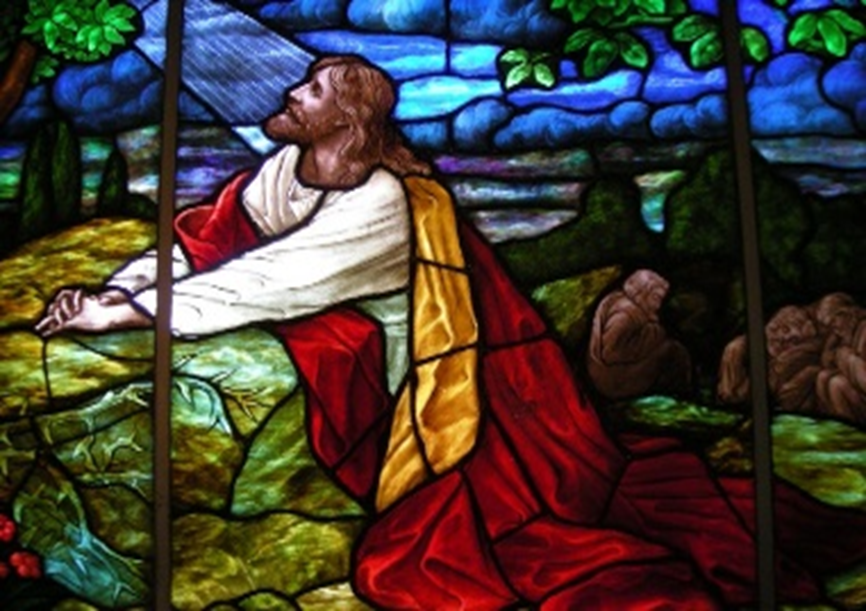
The Gospels describe his arrest in the Garden, the stages in his trial, the mockery of the soldiers, and his crucifixion on Friday. Mark’s account simply describes this climatic event.

“They bought Jesus to the place called Golgotha (which means The Place of the Skull). Then they offered him wine mixed with myrrh, but he did not take it. And they crucified him. Dividing up his clothes, they cast lots to see what each would get. It was the third hour when they crucified him…At the sixth hour darkness came over the whole land until the ninth hour. And at the ninth hour Jesus cried out in a loud voice, ‘Eloi, Eloi lama sabachthani?—which means, ‘My God, my God why have you forsaken me?…With a loud cry, Jesus breathed his last’”  (Mark 1522,23,25,33,37).

Very early on the first day of the week, Jesus rose from the dead. He first appeared to Mary and some other women followed by Peter, the twelve and “after that he appeared to more than five hundred of the brothers at the same time” (1 Cor. 15:6). Luke informs us in Acts that “until the day he was taken up to heaven, …he showed himself to these men and gave many convincing proofs that he was alive. He appeared to them over a period of forty days and spoke about the kingdom of God” (Acts 1:2-3). Finally, he gathered them on a mount in “the vicinity of Bethany” and “he was taken up before their very eyes, and a cloud hid him from their sight” (Acts. 1:9).

The apostles summarize the saving implications of Jesus’ physical death, resurrection, and ascension into heaven. “He himself bore our sins in his body on the tree, so that we might die to sins and live for righteousness, by his wounds you have been healed. For you were like sheep going astray but now you have returned to the Shepherd and Overseer of your souls” ( 1 Peter 2:24,25). “Christ died for sins once for all, the righteous for the unrighteous, to bring you to God. He was put to death in the body but made alive by the Spirit” ( 1 Peter 3:18,19). As the sinless God-man, Jesus Christ willingly became our substitute, in his death paying the penalty for our sins.

By dying for our sins, Christ became the mediator of a new covenant, a better covenant than that mediated by old covenant priests. “Because he lives forever, he has a permanent priesthood. Therefore, he is able to save completely those who come to God through him, because he always lives to intercede for them. Such a high priest meets our need—one who is holy, blameless, pure, set apart from sinners, exalted above the heavens. Unlike the other high priests, he does not need to offer sacrifices day after day, first for his own sins, and then for the sins of the people. He sacrificed for their sins once for all when he offered himself”” (Heb. 7:24-27).

Flowing from faith in that one sacrifice issue all of the blessings of salvation; regeneration, justification, adoption, sanctification and glorification—the astounding features of our complete salvation. We’ll consider each of these in turn in the chapters that follow.

Through his death, resurrection, and session at the Father’s right hand, he becomes not only our interceding high priest but our shepherd, the one who leads us ever deeper into the joy of the redeemed.

(Let me know your thoughts on this subject. If you appreciate this blog, please pass it on. If I can help you spiritually, let me know. Further articles, books, and stories at:  Facebook: Eric E Wright Twitter: @EricEWright1 LinkedIn: Eric Wright ; Eric’s books are available at: https://www.amazon.com/Eric-E.-Wright/e/B00355HPKK%3Fref=dbs_a_mng_rwt_scns_share)

The Virgin-born Saviour – Another in a series on essential Christian Doctrines.

We come in this post to the most essential truth of all, the historic reality of Jesus Christ, the only mediator between men and God. Seeking to describe this astonishing person with words is almost impossible. But we must try, because belief in his person defines our destiny.

But first, lest we hide our need of his salvation behind a smokescreen of imagined independence and self-reliance, let’s remind ourselves of our plight. “Your iniquities have separated you from your God; your sins have hidden his face from you, so that he will not hear”—when you complain or cry for help. (Isaiah 59:2) We are separated from eternal help. Our sins are unforgiven. We stand guilty before the bar of divine justice. We face eternity in hell. Until we acknowledge our sins, God will not hear us. Instead, “the wrath of God is revealed from heaven against all unrighteousness” (Rom. 1:12). Who will intercede for us, fending off God’s wrath? Who will deliver us from our own blind self-righteousness?

“There is one God and one mediator between God and men, the man Christ Jesus who gave himself as a ransom for all men” (1 Timothy 2:5,6). Consider then, the arrival of this mediator.

In the counsels of the godhead, the Father, Son, and Holy Spirit determined to mount a rescue operation. The Son of God was chosen as the spearhead of this rescue. Remember, “He is the image of the invisible God…For by him all things were created; things in heaven and on earth, visible and invisible…all things were created by him and for him. He is before all things, and in him all things hold together” (Col. 1:15-17). Although he was the creator and sustainer of the whole universe, and eternally God, the Son, co-equal with the Father and the Spirit, he voluntarily agreed to become our Saviour.

In mounting this rescue operation, God, the Son, came down amongst us. As God, he is omnipresent, so in what sense did he come? He came setting aside something and embracing something else. He voluntarily set aside the independent exercise of his divine prerogatives—power, omnipresence, omniscience—and embraced humanity by being born as a real baby of the virgin Mary. (See Phil. 2:5-8.)

Mary was frightened when the angel announced his birth, but he said to her; “Do not be afraid, Mary. You have found favor with God. You will be with child and give birth to a son, and you are to give him the name Jesus. He will be great and will be called the Son of the Most High. The Lord God will give him the throne of his father David…the holy one to be born will be called the Son of God” (Luke 1:30-32, 35).

When Mary was found to be with child, her betrothed, Joseph, thought to divorce her quietly but an angel spoke to him. “Joseph, son of David, do not be afraid to take Mary home as your wife, because what is conceived in her is from the Holy Spirit. She will give birth to a son, and you are to give him the name Jesus, because he will save his people from their sins. All this took place to fulfill what the Lord had said through the prophet” (Matt. 1:20-22). That babe was the prophesied one, the Messiah, promised from Eden on. No other child had 2000 years of prophecies about his coming. No other child came to atone for our sins. And no other child was virgin born through the conception of the Holy Spirit.

No wonder the writers of Christmas carols wax poetic;

Veiled in flesh the Godhead see,
Hail the incarnate Deity,
Pleased as man with man to dwell,
Jesus, our Emmanuel.
Hark! The herald angels sing,
“Glory to the newborn King!”

The story of Jesus’s birth has beguiled people from all ages. It is charming. Who doesn’t love a baby. But a baby called Immanuel, God with us? A baby born in a manger? A birth heralded by a choir of angels? Who is this babe?

All babies have a beginning. Yet Christ always existed as the Son of God. “He is before all things, and in him all things hold together” (Col. 1:17). “In the beginning was the Word, and the Word was with God, and the Word was God…The Word became flesh and made his dwelling among us. We have seen his glory, the glory of the One and Only, who came from the Father, full of grace and truth” (John 1:1,14). He himself testified, “I am the Alpha and the Omega, [first and last] who is, and who was, and who is to come, the Almighty” (Rev. 1:8) 

Imagine this; the eternal creator of time who exists beyond time, came into time; the immaterial God took on a material body; the almighty God came as a helpless babe. God and man; the God-man. No avatar. No figment of someone’s superheated imagination. “In this way it came about that the two whole, perfect, and distinct natures, the divine and the human, were inseparably joined together in one Person, without the conversion of the one nature into the other, and without the mixing, as it were of one nature with the other; in other words, without confusion. Thus, the Son of God is both truly God and truly human, yet one person, Jesus Christ, the only mediator between God and man” (The 1689 Confession, chapter 8, 2.) Our mediator is one Person with two distinct natures.

In some mysterious way which is beyond our experience or understanding, the infinite, eternally existing Son of God came as Jesus, our Shepherd, Friend, Saviour, and Mediator.

Incredible? Yes. His body was not a phantom, not a mirage but a real flesh and blood body. As a baby, “the child grew and became strong; he was filled with wisdom, and the grace of God was upon him…when he was twelve years old, they went up to the Feast” (Luke 2:40,42). Jesus went through all the stages of human development.

As man, he ate and thirsted and felt pain and became tired and wept. His disciples touched him. “That which was from the beginning, which we have heard, which we have seen with our eyes, which we have looked at and our hands have touched—this we proclaim concerning the Word of life [Jesus]” (1 John 1:1). An essential truth of the Christian faith that must be believed by all true Christians concerns the genuine human nature that Christ embraced without ceasing to be God, the Son. He is the eternal Son of God; truly God and truly man—two natures in one person. But how could he atone for our sins?

(Let me know your thoughts on this subject. If you appreciate this blog, please pass it on. If I can help you spiritually, let me know. Further articles, books, and stories at:  Facebook: Eric E Wright Twitter: @EricEWright1 LinkedIn: Eric Wright ; Eric’s books are available at: https://www.amazon.com/Eric-E.-Wright/e/B00355HPKK%3Fref=dbs_a_mng_rwt_scns_share)

Why being a fairly good, but imperfect person, is not enough to save you from Judgement. Essential Beliefs, #40, the Atonement.

To understand Christian salvation, we must understand law and guilt. Most laws are good. They were created to bring order and safety to a society. Don’t cross the street on a red light. Reduce speed to 40 kph in a school zone. List all ingredients in foods for sale. Wear seatbelts when you drive. Don’t text and drive. Report all income. Pay your taxes.

And yet we find ourselves irked by restraints on our desire to do whatever we want. Why? We are insipient law-breakers. We glance in all directions to see if there are any police observing as we glance at our phones while driving. We race across the road just too late to catch the yellow light.

Thousands of years ago, God gave Moses the ten commandments. Ten simple laws to define moral life. Ten moral fenceposts to define the circle of moral freedom within which we can live blessed and guilt-free lives. These laws became the basis of God’s covenant with the nation Israel. God’s chosen people were to obey his laws and thus demonstrate to all humanity the dimensions of a flourishing society. They failed. They repeatedly broke God’s laws.

Actually, we have all broken God’s good laws. The ten commandments merely codified and clarified what was already written on our consciences. Whether we are from a jungle tribe distant from advanced societies or live in a modern city, we instinctively know it is wrong to steal, kill, or lie.

Yet, in spite of what we know, we break God’s laws. We are all law-breakers. We expect to face justice if we are caught stealing a car. But do we realize that God, the Judge of all the earth, will hold us accountable for breaking his laws? And he is much more aware than any human judge of our duplicity, self-righteousness, and pride. He sees every secret sin. “Each of us will give an account of ourselves to God” (Romans 14:12). When? “Just as man is destined to die once and after that to face judgment” (Hebrews 9:27). The penalty we face for sinning against what is good and true and blessed is not a slap on the wrist. It is not a short stay in purgatory. It is not breaking rocks in some celestial quarry. “The wages [debt due] of sin is death” (Romans 9:23). The Bible explains that the punishment of death means eternal separation from God in the agonies of hell.

But out of his infinite mercy and grace, God provided a way for our infinite debt to be paid. How? Through the sacrifice of Jesus Christ on the cross. “Christ was sacrificed once to take away the sins of many” (9:28).

As prophesied in the Old Testament, the Son of God had to become man to atone for human debt. As man, he did what we had not done, he perfectly kept the law. “When the time was fully come, God sent his Son, born of a woman, born under law to redeem those under law, that we might receive the full rights of sons” (Gal. 4:4,5). Jesus, born under the law, born as a man, came to redeem us from our guilt as law breakers.

Without his atonement we are without hope. We cannot pay our debt to God by trying to keep the law. Nothing we do can approximate 100% obedience. 51% obedience is not good enough to erase the guilt incurred by breaking 49% of the law. Nor 75%, nor 95%. “All who rely on observing the law [to please God and be forgiven] are under a curse, for it is written: ‘Cursed is everyone who does not continue to do everything written in the Book of the Law.’ Clearly, no one is justified before God by the law” (Gal. 3:10,11).

Fortunately, Christ paid our debt by suffering in our place. “Christ redeemed us from the curse of the law by becoming a curse for us, for it is written: ‘Cursed is everyone who is hung on a tree.’ He redeemed us in order that …by faith we might receive the promise of the Spirit” (Galatians 3:13,14). We are saved from hell by faith in Jesus’s death on the cross for me, faith in His resurrection, faith in the Gospel, faith in his atoning sacrifice. Faith that He alone can cancel my debt. Faith that through the Holy Spirit he gives, I can begin a new life, a God-entered life.

No wonder we sing, “What can wash away my sin? Nothing but the blood of Jesus.” And, “Jesus keep me near the cross.”

(Let me know your thoughts on this subject. If you appreciate this blog, please pass it on. If I can help you spiritually, let me know. Further articles, books, and stories at:  Facebook: Eric E Wright Twitter: @EricEWright1 LinkedIn: Eric Wright ; Eric’s books are available at: https://www.amazon.com/Eric-E.-Wright/e/B00355HPKK%3Fref=dbs_a_mng_rwt_scns_share)