Tag Archives: Mediator

The God-man, Mediator of a New Covenant – Another in a series on Essential Christian Doctrines.

Having willingly embraced the task of becoming our mediator, and being anointed by the Holy Spirit to an unlimited extent, Jesus perfectly fulfilled God’s law. Any reading of the Gospels makes crystal clear that Jesus was without sin of any kind. Jesus explained to those questioning him that he always kept the law of God, “I always do what pleases him [the Father]…Can any of you prove me guilty of sin?”(John 8:29, 46). When on trial, even pagan Pilate affirmed his freedom from guilt and sought to convince the crowd to release him.

The apostles testified to his sinlessness. “God made him who had no sin to be sin for us, so that in him we might become the righteousness of God” (2 Cor. 5:20). “He committed no sin, and no deceit was found in his mouth” (1 Peter 2:22). “Everyone who sins breaks the law; in fact, sin is lawlessness. But you know that he appeared so that he might take away our sins and in him is no sin” (1 John 3:4,5). Hebrews explains that we have a high priest who can sympathize with our weaknesses, for he “was tempted in every way, just as we are—yet without sin” (Hebrews 4:15). He was “full of grace and truth” (John 1:14). “He spoke the very words of God, for God gave him the “Spirit without limit” (John 3:34).

The eternal Son of God took on human flesh through the virgin birth, grew as the man Jesus, perfectly kept the law of God throughout his life and at the age of thirty he “began to preach, ‘Repent for the kingdom of heaven is near’” (Matthew 4:17). Of his teachings people commented, “No one ever spoke the way this man does” (John 7:46).

The four gospels plus the writings of his apostles describe the three years of his earthly ministry. He taught, he healed the blind, the lame, and the dumb. He even raised the dead. At the end of his gospel, John writes of how impossible it was to describe the whole scope of his life. “This is the disciple who testifies of these things and who wrote them down. We know that his testimony is true. Jesus did many other things as well. If every one of them were written down, I suppose that even the whole world would not have room for the books that would written” (John 21:24,25).

Almost a third of the gospels describe the most crucial last week in his life—his arrest, trial, crucifixion, and resurrection. As this week drew near, he began to prepare his disciples. At least three times “he said to them, ‘The Son of Man is about to be delivered into the hands of men, and they will kill him and he will be raised on the third day’ and they were greatly distressed” (Matt. 17:22,23; Mark 9:30,31).

In the Garden of Gethsemane, knowing something of the utter desolation he would face in becoming our atoning sacrifice, he cried out in agony of spirit three times for the Father to let this cup pass from him. When he realized this was not possible, he prayed “nevertheless, not my will but yours be done.”
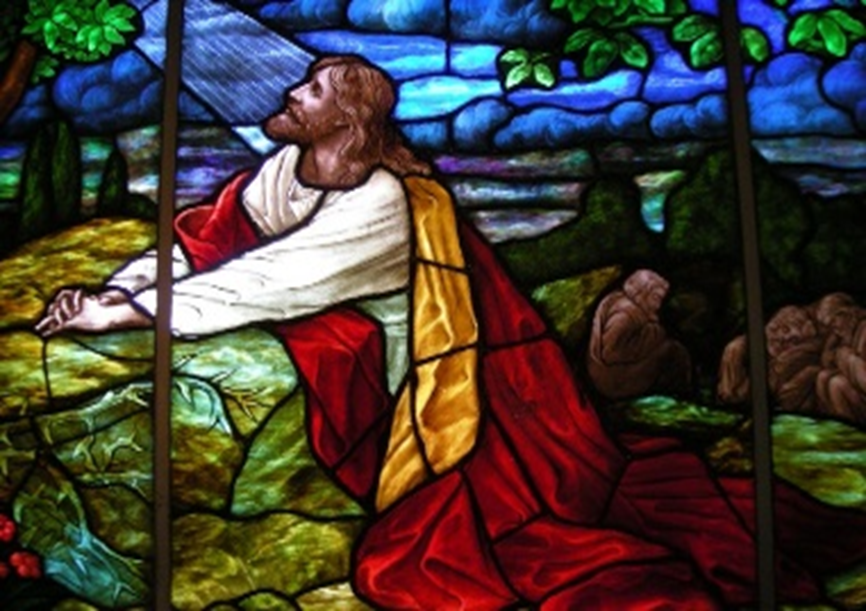
The Gospels describe his arrest in the Garden, the stages in his trial, the mockery of the soldiers, and his crucifixion on Friday. Mark’s account simply describes this climatic event.

“They bought Jesus to the place called Golgotha (which means The Place of the Skull). Then they offered him wine mixed with myrrh, but he did not take it. And they crucified him. Dividing up his clothes, they cast lots to see what each would get. It was the third hour when they crucified him…At the sixth hour darkness came over the whole land until the ninth hour. And at the ninth hour Jesus cried out in a loud voice, ‘Eloi, Eloi lama sabachthani?—which means, ‘My God, my God why have you forsaken me?…With a loud cry, Jesus breathed his last’”  (Mark 1522,23,25,33,37).

Very early on the first day of the week, Jesus rose from the dead. He first appeared to Mary and some other women followed by Peter, the twelve and “after that he appeared to more than five hundred of the brothers at the same time” (1 Cor. 15:6). Luke informs us in Acts that “until the day he was taken up to heaven, …he showed himself to these men and gave many convincing proofs that he was alive. He appeared to them over a period of forty days and spoke about the kingdom of God” (Acts 1:2-3). Finally, he gathered them on a mount in “the vicinity of Bethany” and “he was taken up before their very eyes, and a cloud hid him from their sight” (Acts. 1:9).

The apostles summarize the saving implications of Jesus’ physical death, resurrection, and ascension into heaven. “He himself bore our sins in his body on the tree, so that we might die to sins and live for righteousness, by his wounds you have been healed. For you were like sheep going astray but now you have returned to the Shepherd and Overseer of your souls” ( 1 Peter 2:24,25). “Christ died for sins once for all, the righteous for the unrighteous, to bring you to God. He was put to death in the body but made alive by the Spirit” ( 1 Peter 3:18,19). As the sinless God-man, Jesus Christ willingly became our substitute, in his death paying the penalty for our sins.

By dying for our sins, Christ became the mediator of a new covenant, a better covenant than that mediated by old covenant priests. “Because he lives forever, he has a permanent priesthood. Therefore, he is able to save completely those who come to God through him, because he always lives to intercede for them. Such a high priest meets our need—one who is holy, blameless, pure, set apart from sinners, exalted above the heavens. Unlike the other high priests, he does not need to offer sacrifices day after day, first for his own sins, and then for the sins of the people. He sacrificed for their sins once for all when he offered himself”” (Heb. 7:24-27).

Flowing from faith in that one sacrifice issue all of the blessings of salvation; regeneration, justification, adoption, sanctification and glorification—the astounding features of our complete salvation. We’ll consider each of these in turn in the chapters that follow.

Through his death, resurrection, and session at the Father’s right hand, he becomes not only our interceding high priest but our shepherd, the one who leads us ever deeper into the joy of the redeemed.

(Let me know your thoughts on this subject. If you appreciate this blog, please pass it on. If I can help you spiritually, let me know. Further articles, books, and stories at:  Facebook: Eric E Wright Twitter: @EricEWright1 LinkedIn: Eric Wright ; Eric’s books are available at: https://www.amazon.com/Eric-E.-Wright/e/B00355HPKK%3Fref=dbs_a_mng_rwt_scns_share)
The Spearhead of God’s Rescue Operation – Essential Beliefs, #39

Is there anyone who will be our advocate against “the slings and arrows of outrageous fortune,” as Shakespeare describes human existence? We all need someone on our side. Our mother or father, a big brother, a friend, a spouse. A Saviour. A Mediator. Is there anyone?

In our rather irregular series of meditations on essential of the faith, I come today to the most essential truth of all, the historic reality of Jesus Christ, the Son of God, the only mediator between men and God. Seeking to describe this astonishing person with words is almost impossible. But we must try, because belief in His person defines our destiny.

But lest we belittle our need of his salvation or hide our need behind a smokescreen of imagined independence and self-reliance, let’s first diagnose our plight. “Your iniquities have separated you from your God; your sins have hidden his face from you, so that he will not hear”—when you complain or cry for help. (Isaiah 59:2) Just look around at the moral chaos we’ve introduced into our world. Consider the grim history of the twentieth century. Or, more to the point, let us allow our consciences to probe deep into our own psyches. We are duplicitous. We hide our selfishness beneath a cloud of self-righteousness. “All have sinned and come short of the glory of God,” [The divinely designed human flourishing that ought to reflect God’s glorious beauty.] (Romans 3:23). We are a mess!

Fortunately, in the counsels of the godhead, the Father, Son and Holy Spirit determined to mount a restoration operation. The Son of God was chosen as the spearhead of this rescue. Although he was the creator and sustainer of the whole universe, and eternally God the Son, co-equal with the Father and the Spirit, he voluntarily agreed to become our Saviour. “He is the image of the invisible God…For by him all things were created; things in heaven and on earth, visible and invisible…all things were created by him and for him. He is before all things, and in him all things hold together” (Col. 1:15-17).

As God, the Son, he is omnipresent, so in what sense did he come? He came setting aside something and embracing something else. He voluntarily set aside the independent exercise of his divine prerogatives, took on human form with all its limitations, and was born of the virgin Mary. Mary was frightened when the angel announced his birth, but he said to her; “Do not be afraid, Mary. You have found favor with God. You will be with child and give birth to a son, and you are to give him the name Jesus. He will be great and will be called the Son of the Most High. The Lord God will give him the throne of his father David…the holy one to be born will be called the Son of God” (Luke 1:30-32, 35).

Imagine this; the eternal creator of time who exists beyond time, came into time; the immaterial God took on a material body; the almighty God came as a helpless babe. God and man; the God-man. No avatar. No figment of someone’s superheated imagination. “In this way it came about that the two whole, perfect, and distinct natures, the divine and the human, were inseparably joined together in one Person, without the conversion of the one nature into the other, and without the mixing, as it were of one nature with the other; in other words, without confusion. Thus the Son of God is now both true God and true man, yet one Christ, the only mediator between God and man” (The 1689 Confession, chapter 8, 2.) Our mediator is one Person with two distinct natures.

In some mysterious way which is beyond our experience or understanding, the infinite, eternally existing Son of God came as Jesus, our Shepherd, Friend, Saviour and Mediator. We’ll consider further aspects of his person and role in subsequent posts, but surely this is enough to engage our minds for years to come.

(Let me know your thoughts on this subject. If you appreciate this blog, please pass it on. If I can help you spiritually, let me know. Further articles, books, and stories at:  Facebook: Eric E Wright Twitter: @EricEWright1 LinkedIn: Eric Wright ; Eric’s books are available at: https://www.amazon.com/Eric-E.-Wright/e/B00355HPKK%3Fref=dbs_a_mng_rwt_scns_share)

The One Behind Christmas: Prophet, Priest & King

Who is this one who came at Christmas? A great teacher? So much more. Like David we should cry, “One thing I ask of the Lord, this is what I seek: that I may dwell in the house of the Lord all the days of my life, to gaze upon the beauty of the Lord and to seek him in his temple” (Psalm 27:4). But we don’t need to go to a temple. God has come near in Jesus. We can contemplate his beauty for the rest of our days and never do more than touch the edges of his glory. Sunsets and flowers and mountains and the rising moon and rivers and the ocean; all their beauty is derivative coming from to the one who “created all things.” If these created things are beautiful, how much more the source of all beauty.

Heaven will never exhaust this contemplation of the beauty of the Lord. As Sam Storms wrote; “Our experience of God will never be stale. It will deepen and develop, intensify and amplify, unfold and increase, broaden and balloon.”

We can be sure about one thing about Him. Christmas celebrates the birth of one who came into the world to fulfill a specific, predetermined mission. “For there is one God and one mediator between God and men, the man Christ Jesus” (1 Timothy 2:5). Jesus was born to be the mediator between God and mankind. As the one mediator, He is a prophet, priest and king.

  • Jesus is a prophetic mediator

Jesus was born to be the ultimate prophet, the one who would explain the need for his intervention to save us from God’s righteous wrath. Throughout history prophets such as Abraham, Noah, Isaac, and Moses served as spokesmen for God. In Deuteronomy 18:15-20 Moses predicted the coming of a prophet like him whose words would have final authority.

Jesus is that final prophet. He revealed to us the way God, in love, would provide for his wrath to be appeased and our sins forgiven without extinguishing his justice and righteousness. Read of his life and teaching in the gospels. Join the people who “were all filled with awe and praised God. ‘A great prophet has appeared among us’, they said. ‘God has come to help his people’” (Luke 7:16). Marvel with the people who were stirred at his entrance into Jerusalem, saying, “This is Jesus, the prophet from Nazareth in Galilee” (Matt. 21:11). Be astounded at his parables. Join Peter and the martyr Stephen who declared him to be the prophet predicted by Moses. (Acts 3:22; 7:37) But he was not only a speaking prophet but also a priest and king. 

  • Jesus is the Mediator-Priest

Scripture reveals that He is the eternal one, creator of time who came among us to live in time for 33 years. He is the infinite God who took up a finite body. He is the unapproachable thrice holy Son of God who came near to walk among unholy men and women. He is the incorporeal Son of God who took on human flesh. He was born of Mary on a mission to be the mediator between God, angry at our sins, and fallen, rebellious mankind. He came to show us what love is. He came as the one and only mediator; prophet, priest, and king. As that final prophet he came to teach us how to live and to seal a new covenant between God and man; a covenant—not of works but of grace.

Our eternal destiny depends upon his role as mediator priest of a new covenant between God and man. From mankind’s fall in the Garden of Eden, blood sacrifice has been essential to approach God. Jesus has come as the final and the only perfect priest fulfilling the fallible role of Abraham, Isaac, Jacob, and Aaron. The book of Hebrews explains; “There have been many of those priests, [who died] … but because Jesus lives forever, he has a permanent priesthood. Therefore, he is able to save completely those who come to God through him because he always lives to intercede for them. Such a high priest meets our need—one who is holy, blameless, pure, set apart from sinners, exalted above the heavens…He sacrificed for their sins once for all when he offered himself” (Hebrews 7:23-27).

His death upon the cross is our only hope. In heaven he intercedes for us, pleading for our salvation based upon the blood he shed for us so that God might be just and yet the justifier of all those who believe in Him. Do we believe? Have we asked Jesus Christ to be your Saviour? Do we expect God to be inconsistent, denying his own standards and forgive us without accepting the atonement of Christ? Without embracing God’s elaborate plan of salvation centred in the blood of Christ shed for us, we will face the wrath of God. Look to Jesus now and live!

  • Jesus sits on heaven’s throne as king

As a new year begins to unravel before us, apparent chaos reigns. Ukraine, what was the peaceful breadbasket of Europe, continues to endure darkness and cold as it fends off Russian aggression. China continues to harass its citizens and seeks to extend its influence into all of Asia and Africa, while even meddling in Canadian elections. Haiti is in chaos as is Myanmar, Iran and innumerable other countries. Why so much chaos? Because the prince of darkness goes about sowing chaos, seeking to harm God’s creation and destroy his image-bearers. “He is filled with fury, because he knows that his time is short” (Revelation 12:12, ESV).

Into this darkness, 2000 years ago, light shone in the form of Jesus who came to be prophet, priest, and king. As the final prophet he introduced and taught us how to live in the new covenant. As priest he interceded for us by offering his own blood to atone for our sins.

As King, he sits on his father’s right hand conquer evil and to spread light and truth and love. Paul prayed that we may be enlightened to see God’s “incomparably great power for us who believe. That power is like the working of his mighty strength, which he exerted in Christ when he raised him from the dead and seated him at his right hand in the heavenly realm…and God placed all things under his feet and appointed him to be head over everything for the church” (Eph. 1:18-22).  

He is the king and because of his power he ensures that “all things work together for good to those who love God and are called according to his purpose” (Rom. 8:28). Nothing can hinder the outworking of his purposes as he slowly moves us toward the day when he will descend with power and glory to raise the death and wreak judgment on the earth.

In the meantime, we have a task to fulfill. Jesus said, “All authority is heaven and on earth has been given to me. Therefore go and make disciples of all nations” (Matt. 28:18).

Because he is king, we have certainty of success. History is moving toward its culmination. Justice will prevail. There will be a new heaven and a new earth in which dwells righteousness. In the midst of chaos and all the things that seem so bad, we have peace. He is on his throne. We can rest upon his promises and sleep gently with his kingly arms around us.