Do you love God’s creation? Do you sometimes sense God speaking to you while walking down a country road or gazing at the seashore? Do the clouds and moon amaze you?
Some years ago we moved from the city of Toronto to a house in the country. The scenes down our country road captivated us. I’ve written about those experiences in this revised version of that original book. The book draws practical applications that are true to Scripture and glorifying to our great Creator from life out in the countryside.
We discovered the fingerprints of God in wind and waves, the first snow and spring flowers, fallen leaves and singing birds, butterflies and stinging nettles. I want to share our discoveries with you.
The paperback book will be available through Amazon in a week or two. The ebook is now ready for pre-order.
As Christians we want to please God. “So, whether you eat or drink, or whatever you do, do all to the glory of God” (1 Cor. 10:31). Our desire to please God is synonymous with living a life that glorifies God. “So glorify God in your body” (1 Cor. 6:20). But what does it mean to glorify God? Since I often use common biblical words like these without thinking too deeply, I concluded that I need to clarify their meaning.
The Glory of God
To understand glorify, we first need to consider its root, glory, which will have a fundamental bearing on what we do to make that glory known. Biblical scholar, Augustus Strong defines glory as “magnificence, excellence, preeminence, dignity, grace, or majesty as belonging to God or Christ.” But what is that excellence that God possesses? Consider several encounters that biblical characters had with his glory.
God’s Glory in Moses’ experience. When Moses descended from Sinai after receiving the ten commandments from God, he wore a veil to cover his face. His face was glorious, too brilliant to look at. Like a mirror, reflecting the sun, Moses proximity to God must have reflected some of God’s radiance.
Moses experience of proximity to God, led him to appeal for more understanding of God’s glory. “Show me your glory. And the LORD said, ‘I will cause all my goodness to pass in front of you, and I will proclaim my name, the LORD, in your presence. I have mercy on whom I will have mercy, and I will have compassion on whom I will have compassion. But, he said, ‘you cannot see my face, for no one may see me and live” (Ex 33: 18-20). God then put Moses in a cleft in the rock, covered him with his hand as his glory passed by. This passage indicates that glory is a reflection of God’s attributes including his goodness, mercy, and compassion and those implied by his Name. It also reminds us that the full revelation of God’s being is beyond our ability to absorb—hidden behind blinding light. For example, we can’t see God’s omnipotence, eternity, omnipresence, or omniscience. They are unique to God. Perhaps these attributes are implied by God’s name, LORD, I am that I am. God can only be compared with himself.
God’s Glory in Isaiah’s experience. Isaiah describes another instance in which glory from God is seen as a blinding brilliance. “In the year that King Uzziah died, I saw the Lord, high and exalted … Above him were seraphim, … And they were calling to one another: ‘Holy, holy, holy is the Lord Almighty; the whole earth is full of his glory.’ At the sound of their voices the doorposts and thresholds shook and the temple was filled with smoke. ‘Woe to me!’ I cried. ‘I am ruined! For I am a man of unclean lips, and I live among a people of unclean lips, and my eyes have seen the King, the Lord Almighty’” (Isaiah 6:1-5). In this passage, glory may be defined as the magnificence of God’s holiness, a revelation of God’s holy otherness.
Might God’s glory be a synonym for all of God’s indescribable attributes? Let’s continue our study.
God’s glory and the shepherds
In the Christmas story, an angel of the Lord appeared to shepherds outside Bethlehem announcing the birth of a “Saviour … who is Christ, the Lord” and “the glory of the Lord shone around the shepherds and they were terrified” (Luke 2:9). Then a choir of angels appeared “praising God and saying glory to God in the highest” (Luke 2:13,14). The shepherds went to see the newborn Christ after which they returned “glorifying and praising God” along the way back. (Luke 2:20).
Here glory is used in several senses. It was a unique, brilliance that was so unnatural to the shepherds that they were terrified. They recognized it as having come from God. This is not unlike the brilliance that stunned Isaiah. In this record, both the angels and the shepherds glorified God, one through their message and the blinding brilliance that surrounded them and the other by what they told each other on the way back from visiting the newborn Jesus. Firstly, the glorious light seems to symbolize the unfathomable greatness of God. Secondly, the message of both the angels and the shepherds glorifies God by praising him for this amazing birth-event. So glorifying God can occur through blinding light or through celebrating what God does. Glorifying God can mean praise and worship as we join the shepherds in singing about Jesus.
God’s Glory in Creation. In the Christmas narrative the angel cried out, “the whole earth is full of his glory.” Psalm 19, verse one, explains, “The heavens declare the glory of God.” Paul writes, “Since the creation of the world God’s invisible qualities—his eternal power and divine nature—have been clearly seen, being understood by what has been made so that men are without excuse” (Romans 1:20). The stars, the sun, the moon glorify God. The tides, the weather, the lakes, the trees, the flowers—all things declare the glory of God. God is invisible but the things he has created and sustains demonstrate his attributes. Just as a great building displays the brilliance of an architect. As Bach’s musical compositions tell us something of his genius. A beautiful painting shows the skill of the artist. Just so, the whole universe displays God’s creative attributes. But that display is limited to certain attributes without displaying truth about his person.
God’s glory in the Son of God’s incarnation. God wants to be known. To demonstrate that purpose, in the fullness of time, God sent his Son, to most uniquely reveal God’s glory. During Jesus’s transfiguration on a high mountain, the glory he displayed was blinding. “His face shone like the sun, and his clothes became as white as the light” (Matt. 17:2). In this brief instance, Jesus reflected in human form something of the glory of his pre-incarnate deity. During the rest of his time on earth, his deity was veiled but attributes never before seen were revealed..
John makes it clear. “The Word became flesh and dwelt among us, and we have seen his glory, glory as of the only Son from the Father, full of grace and truth…No one has ever seen God, the only God, who is at the Father’s side, he has made him known” (John 1:14,18). Revealing God’s glory was Jesus’s mission.
As Jesus contemplated his coming death, he was troubled but knew he must not shrink from the coming humiliation. He prayed, “Father, glorify your name!” upon which a voice came from heaven, “I have glorified it, and will glorify it again” (John 12:28). Clearly, the Father had glorified Jesus during his incarnation but there was another part of this glory-mission yet to be fulfilled. “Have glorified it,” indicates that by demonstrating divine qualities such as moral holiness, love, mercy, and truth Jesus revealed during his lifetime much about what God is like.
In his high priestly prayer Jesus prayed, “Father, the time has come, glorify your Son, that your Son may glorify you” (John 17:1). His embrace of death for our sins was an indispensable step in manifesting God’s nature. In his passion, Jesus glorified God in ways never before revealed. Jesus manifested God’s infinite, sacrificial, unselfish love, and grace.
God wants to be known! God had been revealing truths about himself down through history. Moses glorified God. Isaiah glorified God. Creation glorifies God. Jesus’s life, death and resurrection was the ultimate message from God revealing what God is like. What about us? How are we to glorify God?
In the final part of this study, we’ll apply this to our lives.
(Let me know your thoughts on this subject. If you appreciate this blog, please pass it on. If I can help you spiritually, let me know. Further articles, books, and stories at: Facebook: Eric E Wright Twitter: @EricEWright1 LinkedIn: Eric Wright ; Eric’s books are available at: https://www.amazon.com/Eric-E.-Wright/e/B00355HPKK%3Fref=dbs_a_mng_rwt_scns_share)
The prophetic office has ceased while the gift continues as prophetic preaching. In the previous posts I demonstrated from Scripture the temporary nature of the prophetic office by recourse to three categories of biblical data.
Prophets appeared at periodic intervals in history—never continuously.
The inspired revelations God gave them were rarely predictive. God used them to speak his message to people in specific historical situations.
Prophecies were authenticated both by their perfect accuracy and by signs, wonders and miracles. Any predictions they brought had to be 100% accurate or be declared false.
The church is “built on the foundation of the apostles and prophets with Christ himself as the chief cornerstone” (Eph. 2:20). The inspired prophetic office has ceased just as the apostolic office has ceased. Revelation in complete. There is no further need for inspired prophets but as a non-inspired ministry gift it continues. Why do I say that? Four categories of evidence lead me to this conclusion.
PROPHETS AS PREACHERS
God chose Moses, Isaiah, and John the Baptizer to not only communicate inspired revelation,-he also gifted them to preach the Word with power. The Greek word for prophecy means simply to make public utterance or to speak out.
Moses spoke to Israelites groaning under Egyptian bondage. Isaiah preached to a nation in declension. Paul appealed to a Corinthian church in disarray due to scandals. The relevance of their messages to particular situations, rendered their preaching memorable to their audiences. Besides these through whom God gave us inspired Scripture, the New Testament mentions other prophets.
The five men, including Barnabas and Saul, who gathered to worship God in Acts thirteen, are called, “prophets and teachers.” The text denotes either that there were at least two prophets, or that all five had both the gift of teaching and that of prophecy. I prefer this latter view. (Acts 13:1)
In Antioch we read, “Judas and Silas, who themselves were prophets, said much to encourage and strengthen the brothers.” (Acts 15:32) Of Paul and Barnabas we read, “But Paul and Barnabas remained in Antioch, where they and many others taught and preached the word of the Lord.” (verse 35) We conclude that a prophetic ministry involves preaching and teaching. These references multiply the number of prophets far beyond those few who gave us our inspired Scriptures. Other references abound. At least one prophet attended Timothy’s commissioning. (1 Tim. 4:14) Several must have been present in Ephesus. (Eph. 4)
First Corinthians contains an extended description of the gift and how it contrasts with tongues. (Chapter 14) “Two or three prophets should speak, and the others should weigh carefully what is said.” (1 Cor. 14:29) If we count both participating prophets and evaluating prophets there must have been between five and ten in Corinth. Paul indicates that a considerable number of men with the gift of prophecy took turns speaking to the Corinthian church. “You can all prophecy in turn so that everyone may be instructed and encouraged.” (vs. 31) New Testament texts, then, specifically mention prophets in Jerusalem, Antioch, Corinth and Ephesus. One quickly gains the impression that prophets commonly ministered in the early churches, functioning as preacher/teachers.
B. EXHORTATIONS TO SEEK THE GIFT OF PROPHECY
If God had reserved the gift of prophecy exclusively for those he chose to lay the foundation of the church, we would not find a general exhortation to seek the gift. We read, however, “Eagerly desire the greater gifts.” One of the greatest is prophecy. Paul specifically states, “Desire spiritual gifts, especially the gift of prophecy, . . . . I would rather have you prophesy . . . . Be eager to prophesy.” (12:31; 14:1,5,39)
These exhortations would be meaningless unless meant to encourage, not only the Corinthians, but believers today to seek the gift. To deny this is to empty the epistles of their relevance.
Each of the three main New Testament gift lists mentions the gift of prophecy. (See Romans 12:6-8, 1 Cor. 12:7-11, Eph. 4:11-13) Only the gift of teaching is mentioned as consistently. This frequency of mention, in epistles of both early and late origin, shows that its use is crucial. Prophecy is one of the five key equipping gifts in Ephesians chapter four. Prophets join apostles, evangelists, pastors and teachers as men given to “prepare God’s people for works of service so that the body of Christ may be built up” (vs. 12). Since equipping for service is a continuing need in all churches, the mention of these five gifts, including prophecy, indicates that in some sense these gifts continue. (In other material I explain my view that while the office of inspired apostles ceased—there were only 12—the gift as missionary church planting continues. Church— No Spectator Sport, Chapter 9.)
C. DETAILED DESCRIPTION OF THE PROPHETIC GIFT
First Corinthians, chapters twelve through fourteen gives a detailed description of the gift of prophecy. In the course of pointing out the necessity of love in gift exercise Paul writes, “If I have the gift of prophecy and can fathom all mysteries and all knowledge, . . . but have not love I am nothing.” (13:2) This text shows that prophecy deals with fathoming mysteries and knowledge.
In the fourteenth chapter Paul establishes the superiority of prophecy over tongues. In verse three and four we read, “Everyone who prophesies speaks to men for their strengthening, encouragement and comfort . . . . He who prophesies edifies the church.” The gift builds up the church by applying God’s Word to people’s specific needs. They strengthen those who are weak. They encourage the discouraged. They comfort the sorrowing. Non-inspired modern prophets mirror the ministry of the inspired prophets of old. God specifically gifts them to apply the Word to particular situations in their churches.
Further we read, “Prophecy, however, is for believers.” Prophecy is exercised so that, “Everyone may be instructed and encouraged” (vs 32). Of course, prophecy also profoundly affects unbelievers, in a way tongues cannot. The unbeliever, hearing tongues speaking, thinks “that you are out your mind.” (vs. 23) But when an unbeliever hears prophesying, “He will be convinced by all that he is a sinner . . . secrets of his heart will be laid bare. So he will fall down and worship God exclaiming, ‘God is really among you.'” (vs. 24,25) While the gift of prophecy is mainly directed towards believers, God also uses it to bring unbelievers under deep conviction.
Available through Amazon
We can define prophecy, in its continuing form, as follows.
The gift of prophecy is that spiritual ability to communicate biblical truth in powerful and relevant ways so that people sense a word from God directed to them in their situation. It is Spirit-filled preaching that may include instruction, encouragement, exhortation, or comfort.
Note the difference between inspired prophecy and edifying prophecy. Inspired prophecies have an unbidden, Spirit-produced element to them as if the Spirit overrides the will of the prophet. “For prophecy never had its origin in the will of man, but men spoke from God as they were carried along by the Holy Spirit” (2 Peter 1:21). But Paul describes the gift of prophecy in the church as orderly and controlled. “The spirits of the prophets are subject to the control of the prophets” (1 Cor. 14:32) Prophecy, in this form, involves orderly presentations of truth which flow from the speaker’s mind and will. This text seems to demonstrate a discontinuity between inspired prophecy and, what I am calling edifying prophecy, which owes its origin (under the Spirit’s general guidance) to the speakers’ own personality and preparation.
Inspiration is evidence of the absolute superintendence by the Spirit, while illumination is evidence of the relative control by the Spirit. A picture of two kinds of prophecy emerges; inspired prophecy that produced the inerrant canon of Holy Scripture (and occasionally included prediction) and prophecy as convicting and edifying preaching. Prophetic preaching draws its power from a broadly based acquaintance with Scripture and ongoing dependence on the Spirit. It includes the ability to size up situations and needs and bring a relevant message. Prophetic preaching leads to conviction, consolation, rebuke, or encouragement. Prophecy, as a continuing gift, requires the illumination of the Spirit but not the inspiration of the Spirit.
The gift of prophecy is preaching. Paul exhorts Timothy to “Preach the Word; be prepared in season and out of season; correct, rebuke and encourage — with great patience and careful instruction” (2 Tim. 4:2).
When any Christian group claims divine authority for one of their pronouncements, they invite disaster. History is littered with the heretical wreckage produced by this propensity to claim divine inspiration for human messages or practices. No wonder, traditional Pentecostals react with alarm to the claims of modern “prophets.” The General Superintendent of the Assemblies of God wrote, “Arbitrary and absolute direction by a prophetic gift is not in accordance with New Testament teaching . . . . A study of church history indicates that every group of people who have claimed to restore apostolic authority to the Church and its government have been arbitrary and demanding. Those who come under their leadership find themselves under bondage.”[i]
D. PROPHECY AS VIEWED IN CHURCH HISTORY.
Flynn writes, “The Early Church had many prophets, who usually employed their gift in their own local congregation. Some eminent prophets itinerated. The Didache, an early manual of church practice, commanded that wandering prophets be supported. ‘Every true prophet who shall settle among you is worthy of his support.'”[ii]
What an intriguing tradition! This stipulation of the Didache demonstrates that although the canon was complete, the early church believed in the continuity of a prophetic ministry. It presents these early prophets as resident preachers. Interestingly, this reference points out a fundamental difference between apostles and prophets. The Didache warned that apostles, (since their ministry was pioneer church planting) should not be supported over a long period. Prophets, however, could be supported as resident ministers because they laboured to edify already established churches.
Calvin gives his view. “By prophesying I do not understand the gift of foretelling the future, but the science of interpreting Scriptures, so a prophet is an interpreter of the will of God.”[iii] Interpretation of the will of God underscores a preacher’s need to size up a situation and then bring relevant Scripture to bear on the central issues involved.
Berkhof, Criswell and many others could be quoted in this regard. J.I. Packer sums it up: “Rather than supposing prophecy to be a long-gone first-century charisma now revived and therefore to be dressed up in verbal clothes that will set it apart from all other forms of Christian communication over the past eighteen or nineteen centuries, we should realize that it has actually been exhibited in every sermon or informal ‘message’ that has had a heart-searching, home-coming’ application in its hearers, ever since the church began. Prophecy has been and remains a reality whenever and wherever Bible truth is genuinely preached–that is, spelled out and applied, whether from a pulpit or more informally. Preaching is teaching God’s revealed truth with application.“[iv] (Italics mine.)
The kingdom needs preaching prophets today as never before! “History tells of no significant church growth and expansion that has taken place without preaching (significant, implying virility and staying power is the key word there.) What history points to, rather, is that all movements of revival, reformation, and missionary outreach seem to have had preaching (vigorous, though on occasion very informal) at their center, instructing, energizing, sometime purging and re-directing and often spearheading the whole movement. It would seem, then, that preaching is always necessary for a proper sense of mission to be evoked and sustained anywhere in the church.”[v]
The gift of prophecy, in its continuing form, is heart- searching, applicational preaching deeply rooted in biblical exposition. Paul encourages us to aspire to great gifts such as this one. If you find such a desire burning within take steps to feed the flame by taking appropriate action. I have listed in the footnote the titles of some good books on preaching.[vi]
Let us all pray for a revival of powerful preaching!
-Samuel Logan Jr., ed., The Preacher and Preaching, Phillipsburg, N.J.: Presbyterian and Reformed, 1986
-Sidney Greidanus, The Modern Preacher and the Ancient Text, Grand Rapids: Eerdmans, 1988
(Let me know your thoughts on this subject. If you appreciate this blog, please pass it on. If I can help you spiritually, let me know. Further articles, books, and stories at: Facebook: Eric E Wright Twitter: @EricEWright1 LinkedIn: Eric Wright ; Eric’s books are available at: https://www.amazon.com/Eric-E.-Wright/e/B00355HPKK%3Fref=dbs_a_mng_rwt_scns_share)
Confusion about the continuity or completion of the prophetic office prevails among Christians today. The Church is “built on the foundation of the apostles and prophets, with Christ Jesus himself as the chief cornerstone” (Eph. 2:20). Since there were only twelve founding apostles, it is reasonable to suppose that the number of inspired prophets was also limited. Let’s look at what the Bible says about prophets.
First, prophets were not present throughout the whole OT period. Certainly, all Old Testament Scripture is prophetic in nature. Christ declared, “All the prophets and the law prophesied until John (the Baptist),” indicating that even the Law was prophetic. (Matt. 11:13) Further, Peter writes, “No prophecy of Scripture . . . was ever made by an act of human will, but men moved by the Holy Spirit spoke from God” (2 Peter 1:21).
God revealed Old Testament Scripture at widely spaced intervals; not in a continuous process. “In the past God spoke to our forefathers through the prophets at many times and in various ways” (Heb. 1:1). Periods of revelation were interspersed with long periods of prophetic silence. Moses, recipient of the Law was the first major prophet. “Since then, no prophet has risen in Israel like Moses, whom the Lord knew face to face” (Deut. 34:10).
Prophets were not present during the period of the Judges and Joshua. Vision was rare. (See 1 Sam. 3:1) Finally, Samuel arose to take up the prophetic mantle. Through the kingdom period which followed the era of Samuel, as priests became increasingly corrupt, prophets as God’s voice became more common. Elijah and Elisha prophesied during this period. God raised up the schools of the prophets to compensate for priestly failure. Prophets of this era, however, did not add to the inspired literature that became Holy Scripture.
The golden period of prophetic greatness extended for about four hundred years, from approximately 800 BC. to 400 BC. During this era prophets such as Isaiah, Jeremiah, Ezekiel and Daniel, produced major works. Others, such as Amos, Hosea, and Malachi, contributed powerful, but short prophetic collections.
Malachi, the last of the Old Testament writing prophets, ushered in four hundred years of prophetic silence until the rise of John, the Baptizer, who introduced Christ. Jesus, as prophet, priest, and king shepherded a new prophetic era which produced the New Testament canon.
Secondly, biblical prophets were inspired vessels used by God to convey messages which usually became books of the Bible. Their messages were God-breathed—inspired. “For prophecy never had its origin in the will of man, but men spoke from God as they were carried along by the Holy Spirit” (2 Peter 5:21). Peter explains, “No prophecy of Scripture came about by the prophet’s own interpretation” (2 Peter 5:20). Hebrews reminds us that, “God spoke to our forefathers through the prophets” (Heb. 1:1). Prophecy in this sense is synonymous with revelation. Paul reminds us that the mystery of Christ and the church, “which was not made known unto men in other generations . . . . Has now been revealed by the Spirit to God’s holy apostles and prophets” (Eph. 3:5). That era has ended.
Surely, no self-proclaimed modern prophet would claim that their messages are an addition to Scripture! Note how emphatically Paul links his prophetic and apostolic credentials to his reception of revelation. “I want you to know, brothers, that the gospel I preach is not something that man made up. I did not receive it from any man, nor was I taught it; rather, I received it by revelation from Jesus Christ” (Gal. 1:11,12). In this inspired sense, the office of prophets has ceased. The Bible is complete.
Although traditional Pentecostals believe that the prophetic office continues in some sense in our day, they express alarm at many of the claims of modern prophets. Raymond Carlson–General Superintendent of the Assemblies of God–warns; “Prophecy by the New Testament apostles was different in authority from that of all other Christians in local churches. The writings of the New Testament are God’s very words . . . . No words spoken today can ever be on a par with the inerrant Scriptures.”[i]
Thirdly, we must distinguish between prediction and preaching in prophetic ministry. On the whole, prophets were not predictors–foretellers–but rather forthtellers, preachers. Moses and John the Baptizer, two of the greatest prophets of all time, recorded little or no prediction. With minor exceptions, the entire content of Moses’ prophetic ministry was either history, ethical statements (law), or exhortations for Israel to heed God’s directives. He did warn them about the consequences of disobeying the law and he did predict that there would be another prophet raised up like him.
In the main, prophets were forthtellers, preachers, appointed by God to herald his Word in a particular context. Consider Moses. God told him, “Now go; I will help you speak and will teach you what to say.” (Ex. 4:12) Moses went with a message from God. Likewise, God commanded Isaiah to, “Go and tellthis people” (Is. 6:9ff).
In a similar way, the prophetic ministry of the apostles contained a minimal of prediction. They spoke to specific needs in concrete situations. The gospels and epistles each appeal to different audiences. Even the most predictive of books, Revelation, brought a message from God to the seven churches of Asia in specific historical situations.
To cry out for a return of the prophetic office out of a desire to listen to predictions, is to demand something of the prophetic office that, even in its heyday, it rarely exhibited. They were great preachers presenting truth. Jesus predicted that the Spirit would lead the apostles into all truth. Did he or did he not? Is the Bible complete or flawed? If he did what he predicted he would do, we have no further need of new revelations.
Paul wrote to Timothy that Scripture contains all the truth necessary for any Christian to be mature and complete in Christ. (See 2 Tim. 3:15-17.) Why this continual clamour for prophets to bring a “revelation,” a “word from God,” a “prediction” when the Scriptures contain the adequate, all-encompassing, and inerrant revelation of God’s will for mankind? To demand the revival of the gift of prophecy, as manifest in biblical prophets, is to devalue the Scriptures, and to encourage the manufacture of counterfeit miracles to verify these modern ‘prophets’.
Fourthly, prophecy must be tested by Scripture and any prediction prove to be 100% accurate. Superficially, many claim that miraculous signs attest their own ministry’s authenticity. We need to remember that the magic of the Egyptian magicians initially mimicked the signs Moses performed. In India, Hindu, Sikh and Buddhist gurus echo Muslim pirs in claiming power to effect miraculous cures. Some even demonstrate their power by walking on fire. But the Bible warns, “Dear friends, do not believe every spirit, but test the spirits whether they are from God, because many false prophets have gone out into the world” (1 John 4:1).
Testing a prophet requires a carefully comparison of their teaching with Scripture. John urges the readers of his first epistle to check whether a prophet’s teaching enshrined or denied the reality of Jesus’ incarnation and deity. (1 John 4:2,3) Much earlier God had warned Moses not to be impressed by miraculous signs but to check the content. “If a prophet . . . appears among you and announces to you a miraculous sign or wonder, and if the sign or wonder . . . takes place, and he says, ‘Let us worship other gods,’ you must not listen” (Deut. 13:1-3). Conformity to revealed truth takes precedence over startling manifestations of signs.
Prophetic prediction must not only be true to Scripture but perfectly accurate. Since God can predict the future with 100% accuracy, any prophecy of his, will come true. An accuracy rate less than 100% necessarily shows that the bearer’s prediction did not originate with God. “If what a prophet proclaims in the name of the Lord does not take place or come true, that message the Lord has not spoken. That prophet has spoken presumptuously” (Deut. 18:22). A failed prophecy called for the perpetrator to be sentenced to death. All New Testament prophecy practiced in the early church passed this litmus test. (See Acts 11:27,28; 21:10,11) Perfect accuracy confirms a prophet’s credentials.
Sadly, many who claim the prophetic gift today, excuse inaccuracy. Several years ago Michael G. Maudlin set out to investigate the excitement generated by reports of the predictions of “The Kansas City Prophets. He wrote; “These men–pastor Mike Bickle, and prophets such as Bob Jones, John Paul Jackson, and Paul Cain are creating a stir in charismatic circles. They claim that the prophetic gift should be restored in the church, that prophecy is a natural, biblical means for God to speak to his people, and that (here’s the apocalyptic part) this increased prophetic activity is a sign of the emergence of the last-days’ victorious church.”[ii] The Kansas City Fellowship joined the Vineyard group of churches under John Wimber, who encouraged believers to seek the gift of prophecy.[iii]
The stir created by Vineyard and KCF moved traditional Pentecostals to issue cautionary statements. Indeed, the Vineyard itself has delineated a series of checks and balances to test prophecy. “All KCF and Vineyard leaders stress that the prophetic movement is immature and apt to make mistakes (except for, they stress, Paul Cain) . . . . The church allows for a generous margin of error in prophetic words . . . . Grudem, who teaches theology at Trinity Evangelical Divinity School and attends a Vineyard-affiliated church, argues that every prophet today will make mistakes.”[iv]
Grudem claims that, “The Old Testament prophets who could not make mistakes without being declared false and put to death . . . in the New Testament are not prophets but apostles . . . . There is a discontinuity between the canonical revelation found in the Bible and the revelation received by modern-day prophets.” But as Robert Thomas, who teaches New Testament at California’s Master’s Seminary says, “How can you have inspired utterance that has error?”[v]
The Vineyard magazine, Equipping, contained a series of articles introducing prophetic ministry. In article after article the magazine attested to the veracity of the revelations that God has given this man and that. In the same breath it warns that prophets make mistakes. “Of course, prophets today do receive revelations from God. But in understanding and reporting what they receive, and in knowing what is from God and what is from their own minds or from a subtle suggestion of the Enemy, prophets do make mistakes . . . . Every prophet today will make mistakes.”[vi]
Sorry, the Bible is clear. Prophets must be 100% accurate or be declared false.
To review: 1. Prophets appeared at periodic intervals in history. 2. God called them to speak and write what he revealed to them. These revelations were rarely predictive. In the main they contained God’s Word for specific historical situations. Prophets were mainly powerful preachers. 3. Predictive prophecies were authenticated by their perfect accuracy.
Much more could be discussed on this topic. Having asserted that inspired prophecy as a gift or office has ceased, I am not saying that prophetic gifting does not continue in the New Testament Church as prophetic preaching. Uninspired prophecy continues as a preaching and teaching gift requiring the exegesis of the biblical text. Today’s prophetic preachers do not claim inspiration but use the inspired text of the Bible as their source. For a fuller treatment of this subject see my book Church-No Spectator Sport available through Amazon. Time permitting, I’ll write a third post in this series describing the limited sense in which the gift of prophecy continues. Of course, none of the above is written to limit God. As he used Agabus to predict a famine and warn Paul (see Acts 11:27,28; 21:10,11), he can at any time raise up a predictive prophet. However, such a rare occurrence must be discerned by Scripture. God is sovereign. May he be glorified in the church through the exegesis of his inspired Word.
[i] G. Raymond Carlson, The Role of the Prophet Today, Article in The Pentecostal Testimony, March 1991, p. 22
[ii] Michael G. Maudlin, Seers in the Heartland, Article in Christianity Today, Jan. 14, 1991, p. 18
[iii] John Wimber, Introducing Prophetic Ministry, Article in Equipping, Fall 1989, pp. 4-6
[vi] Wayne A. Grudem, What Should be the Relationship Between Prophet & Pastor? Article in Equipping, Fall 1989, p. 8
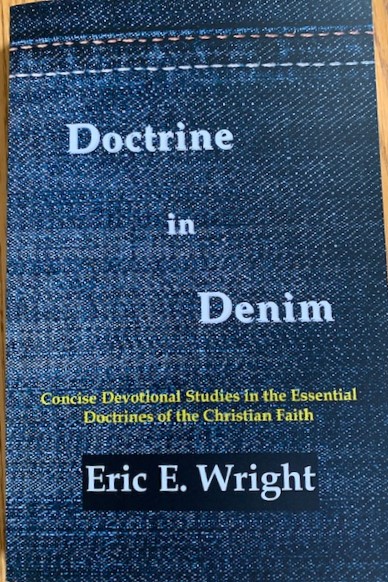
(Let me know your thoughts on this subject. If you appreciate this blog, please pass it on. If I can help you spiritually, let me know. Further articles, books, and stories at: Facebook: Eric E Wright Twitter: @EricEWright1 LinkedIn: Eric Wright ; Eric’s books are available at: https://www.amazon.com/Eric-E.-Wright/e/B00355HPKK%3Fref=dbs_a_mng_rwt_scns_share) See especially, Doctrine in Denim.









 Country Inspiration